


Recent and ongoing projects
Social due diligence and gap analysis against World Bank ESS5 and AFD policies for the Phase 1 urban resettlement process in the Las Lilas sector, Santo Domingo.
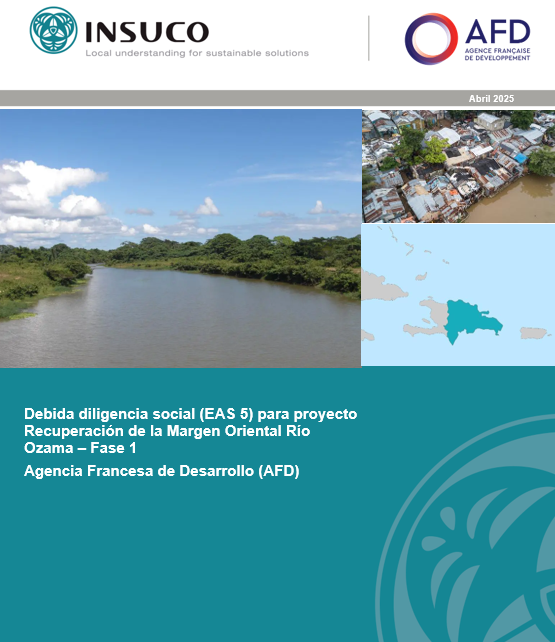
Mission:
Insuco was commissioned by the French Development Agency (AFD) to conduct a social due diligence and gap analysis for Phase 1 of the Ozama River Eastern Bank Resettlement Project in the Las Lilas sector. Assessing compliance against World Bank ESS5 and AFD policies, our team evaluated URBE’s ongoing urban relocation frameworks. Our value lies in bridging international standards with community realities, safeguarding vulnerable households, and delivering key risk-mitigation roadmaps.
The client expected a comprehensive validation of the urban resettlement framework to bridge theoretical compliance with actual field realities in the Las Lilas sector. Insuco assessed URBE’s baseline documentation, evaluated local indemnification processes, and analyzed administrative frameworks under World Bank Environmental and Social Standard 5 (ESS5) and AFD policies.
Results:
The assignment was structured into consecutive diagnostic stages across an explicit multi-week operational schedule. The produced deliverables consist of a formal Work Plan adjusting the field schedule post-Easter; semi-structured interview guides and a communication strategy with validated key messaging; stakeholder meeting minutes; an interim presentation of field findings to the client; a comprehensive draft Social Due Diligence Report; and a final technical report embedding prioritized corrective action plans, responsibilities, timelines, and cost estimations for AFD and URBE.
Our intervention directly impacts the urban project by identifying operational red flags before major relocation payments are distributed. By exposing critical gaps regarding the lack of formal housing plans, absent mechanisms to prevent resettled families from migrating to other high-risk zones, and missing gender-equity parameters in dual-spouse property rights, our work guarantees structural continuity and reinforces localized human rights protection. Ultimately, it equips international donors with decision-ready operational tools that protect the socio-economic resilience of vulnerable urban communities along the Ozama River.
We maximized diagnostic precision by strategically re-engineering the field deployment timeline post-Easter, ensuring optimal stakeholder availability and higher community participation rates. Furthermore, our legal and social experts ent beyond standard document checks by introducing random-sample audits of active PAP files and designing specialized gender-equity screening metrics to safeguard omen’s co-onership rights during relocation payouts.