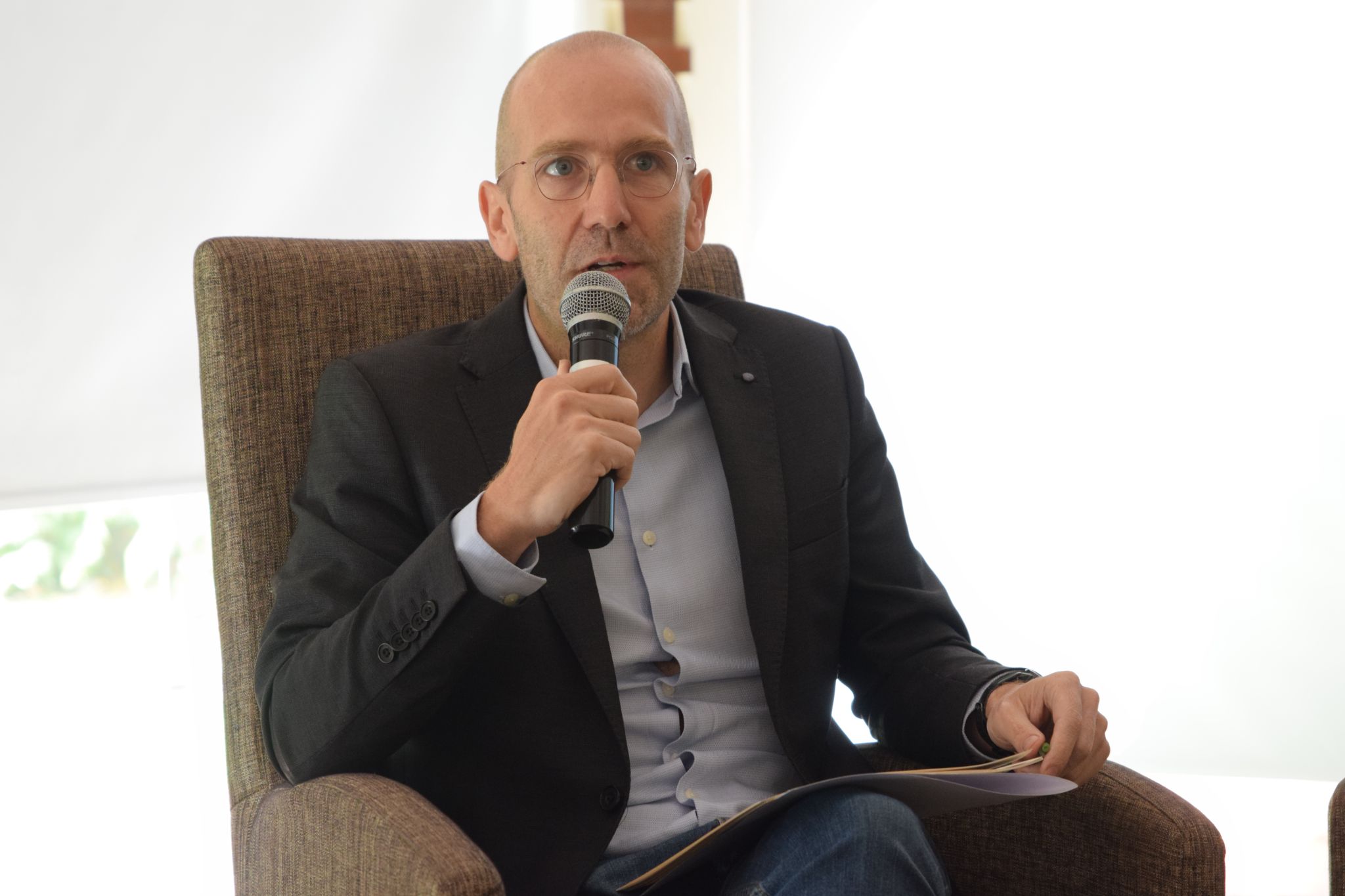
Guillen Calvo, Insuco General Director for Latin America and the Caribbean, and Arianna Espinosa Oliver, our Regional Director for Colombia, Mexico, and Central America, were recently honoured to co-host a dialogue on responsible closures and exits of extractive industry projects, alongside Centro Regional de Empresas y Emprendimientos Responsables (CREER) and the Natural Resource Governance Institute (NRGI).
The event was an enriching day of reflection on valuable experiences, addressing the challenges and opportunities inherent in these processes. Insights were shared by colleagues from various organisations, including the Institute for Human Rights and Business, The University of Queensland, the Ford Foundation, and the Natural Resource Governance Institute.
The conversation highlighted how each phase of an extractive project—from exploration to closure—generates different forms of relationship between companies, the State, and communities. While the early stages are often marked by transactional ties and, at times, State decisions that cause tension, the operation and closure phase offers a vital opportunity to transform these relationships toward a positive legacy.
A responsible closure requires:
- Early planning
- Robust institutional frameworks
- A shared commitment to move beyond the transactional
Key strategies include:
- Investing in productive transitions that sustain local economic dynamism.
- Integrating diverse cultural knowledge and visions, including the relationship of indigenous peoples with nature.
- Strengthening the social fabric and local capacities so that the day after closure becomes an opportunity, not a void.